
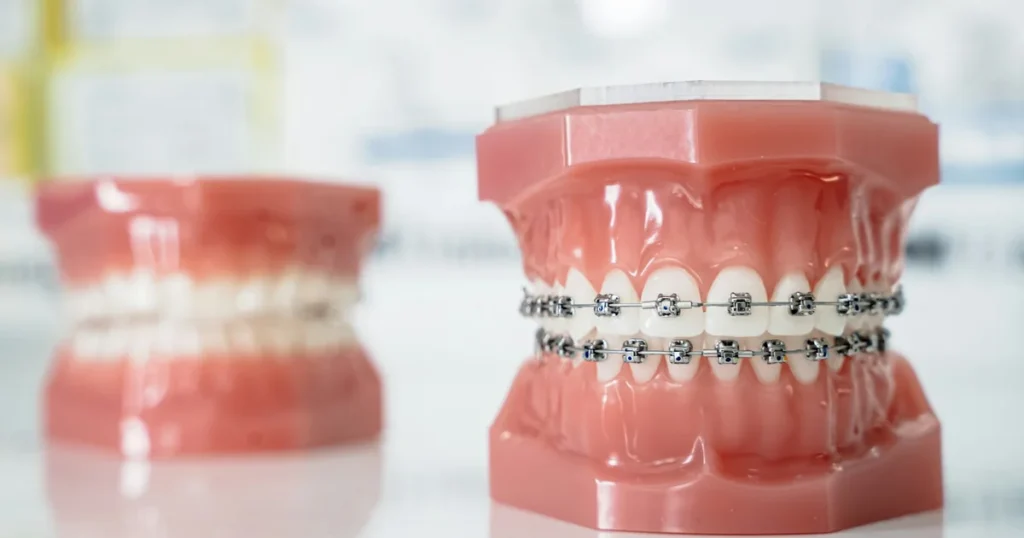
Orthodontics is the branch of dentistry that diagnoses, prevents, and treats problems with how teeth line up and how the jaws fit together. Treatment uses gentle, steady pressure to move teeth into planned positions over months, most often with braces or clear aligners. It can suit children, teens, and adults, depending on dental development and clinical needs. This guide explains what orthodontics can correct, how teeth straightening works, how long it takes, and why retainers matter.
What Problems Can Orthodontic Treatment Correct?
| Problem | What it is | Possible treatment goal |
| Crowding | Not enough space, so teeth overlap or twist | Improve alignment, sometimes by creating space |
| Spacing | Gaps between teeth | Close or redistribute space |
| Overbite | Upper front teeth overlap the lower ones too much | Improve the vertical bite |
| Underbite | Lower front teeth sit ahead of the upper ones | Improve the bite where feasible |
| Crossbite | Upper teeth bite inside the lower teeth | Correct tooth or jaw relationships |
| Open bite | Some teeth do not meet when the mouth closes | Improve tooth contact |
| Rotated teeth | Teeth turned or tilted | Reposition the teeth |
How well a problem can be corrected depends on its cause and severity. Some severe jaw problems need jaw surgery combined with orthodontics, and not every problem can be fixed with braces or aligners alone.
How Does Teeth Straightening Work?
Each tooth is held in the jaw by a ligament. When gentle pressure is applied, bone on one side of the root breaks down and new bone forms on the other. This remodelling lets the tooth move a little at a time.
• Braces use brackets bonded to the teeth and a wire that is adjusted at regular visits to guide movement.
• Clear aligners are a series of removable trays, each shaped slightly differently, that move teeth step by step. They are commonly worn about 20 to 22 hours a day.
What Are the Main Types of Orthodontic Treatment?
| Option | How it works | Things to know |
| Metal braces | Fixed brackets and wires | Treat a wide range of problems |
| Ceramic braces | Tooth-coloured brackets | Less noticeable; need careful cleaning |
| Clear aligners | Removable custom trays | Need consistent daily wear; case selection matters |
| Lingual braces | Brackets behind the teeth | Availability, comfort, and cost vary |
| Expanders and other appliances | Devices for specific jaw concerns | Most useful while jaws are growing |
| Retainers | Fixed or removable | Hold teeth in place after treatment |
Not every option is offered at every practice. Learn more about Invisalign clear aligners in Thunder Bay.
Braces vs. Clear Aligners
| Comparison | Braces | Clear aligners |
| Appearance | Visible brackets and wires | Transparent trays |
| Removable | No | Yes, for eating and cleaning |
| Eating | Avoid hard and sticky foods | Remove trays before eating |
| Compliance | Appliance stays on | Must be worn consistently |
| Suitability | Broad range of cases | Depends on case complexity |
Neither is always faster, more comfortable, or more effective. Our article on whether Invisalign is faster than braces looks at this in more detail.
How Long Does Orthodontic Treatment Take?
Harvard School of Dental Medicine notes that comprehensive orthodontic treatment can range from about 6 to 36 months. Timing depends on the severity of the problem, the appliance, age and jaw development, how closely you follow instructions, and your oral health during treatment.
| Stage | What to expect |
| Consultation | Assessment and discussion of options |
| Planning | X-rays, scans, or impressions |
| Start | Braces fitted or first aligners provided |
| Active treatment | Gradual movement and regular reviews |
| Completion | Braces removed or final aligners finished |
| Retention | Ongoing retainer wear |
Teeth naturally tend to shift after treatment, so retainer wear often continues long term.
How Should You Care for Your Teeth During Treatment?
• Brush at least twice a day, paying close attention around brackets and the gumline.
• Clean between teeth with a floss threader, interdental brushes, or another tool your dentist recommends.
• Remove aligners to eat or drink anything but plain water, and clean them as instructed.
• Avoid hard, sticky, or chewy foods with braces.
• Keep up Dental Hygiene in Thunder Bay visits.
• Wear a mouthguard for contact sports.
• Contact your provider about a loose bracket, poking wire, or cracked aligner rather than fixing it yourself.
What Are the Benefits and Limitations?
Orthodontic treatment can improve alignment, the bite, and the look of your smile, and straighter teeth can be easier to clean. It also has limits and risks, including temporary discomfort, sensitivity, plaque build-up and white spots if cleaning is poor, root shortening in some people, and relapse if retainers are not worn.
When Should Children, Teens, and Adults Consider Orthodontics?
The American Association of Orthodontists recommends that children first see an orthodontist no later than age 7, although many children will not need treatment right away. The teen years are a common time for treatment. Adults of any age can be assessed if their oral health is good. Learn more about our Children’s and Family Dental in Thunder Bay care.
Who Provides Orthodontic Care at Redwood Dental Centre?
Redwood Dental Centre offers Orthodontics in Thunder Bay with clear aligners, including Invisalign®, most often for mild to moderate crowding, spacing, and some bite concerns. Care is provided by our general dentist, who is not a certified specialist in orthodontics. Complex bite or jaw problems are referred to an orthodontic specialist, who provides a separate quote. You receive our quote before anything is ordered.
What Happens at an Orthodontic Consultation?
A first visit helps you understand whether treatment is needed and what your options are. It usually includes:
• A conversation about your concerns and goals
• An examination of your teeth, bite, jaw, and gums
• Photos, X-rays, or a digital scan, where needed
• A discussion of suitable options, likely timing, costs, and retainer needs
• Referral to an orthodontic specialist if the case is complex
Bring a list of questions, any previous X-rays, and your insurance details. You do not need to decide on treatment at the first visit.
What Is Early Orthodontic Treatment for Children?
Some children benefit from treatment while their jaws are still growing, sometimes called early or phase one treatment. It may be considered for crossbites, crowding that is likely to get worse, habits such as thumb-sucking affecting the bite, or front teeth that stick out and are at risk of injury.
Early treatment may use appliances such as expanders or partial braces and is often followed by a second phase once more adult teeth come in. Many children do not need early treatment, which is why an assessment is useful: it can identify who benefits now and who can wait.
What Is Daily Life Like With Braces or Aligners?
• Speaking: aligners may cause a slight lisp for the first few days; this usually settles quickly.
• Eating: with braces, cut food into smaller pieces and avoid hard or sticky items; with aligners, remove them to eat and brush before putting them back.
• Discomfort: some pressure for a few days after an adjustment or new aligner is normal.
• Sports and music: wear a mouthguard for contact sports; players of wind instruments may need a short adjustment period.
• Travel: carry your aligner case, a spare set if advised, and orthodontic wax for braces.
What Types of Retainers Are There?
| Retainer type | How it works | Things to know |
| Clear removable retainer | A thin plastic tray worn at night | Easy to clean; can be lost or damaged |
| Wire removable retainer | Acrylic plate with a wire across the front | Adjustable; more visible |
| Fixed (bonded) retainer | A thin wire bonded behind the front teeth | Always in place; needs careful cleaning |
Your dentist will recommend a type and wear schedule. Many people are advised to keep wearing a retainer at night long term, since teeth can drift throughout life.
What Affects the Cost of Orthodontic Treatment?
Cost depends on the complexity of the case, the appliance, how long treatment takes, the number of visits, and whether retainers and refinements are included. Ask for a written estimate that lists what is included, and check your dental plan’s orthodontic coverage, age limits, and lifetime maximums before you begin.
What Should Adults Know About Orthodontic Treatment?
Adults can have successful orthodontic treatment, but planning takes a few extra factors into account. Jaw growth has finished, so some bite problems can only be fully corrected with surgery alongside orthodontics. Gum health must be stable before teeth are moved, and existing crowns, bridges, implants, or missing teeth affect the plan, since implants cannot be moved with braces or aligners.
Many adults choose clear aligners for appearance and convenience, but the right appliance depends on the problem, not age alone. Orthodontic treatment may also be part of a wider plan, such as straightening teeth before placing a crown, bridge, or implant.
How Can You Tell Treatment Is On Track?
• Aligners fit snugly, with no large gaps between the tray and the teeth.
• Teeth feel some pressure after each change, which settles within a few days.
• Your clinician reports progress at regular checks.
Contact your provider if aligners stop fitting, a bracket keeps coming loose, a wire is causing sores, or pain lasts more than a few days. Missed wear or broken appliances are easier to manage when reported early.
Common Orthodontic Myths
• “Braces are only for children.” Adults can be treated if their teeth and gums are healthy.
• “Aligners are always faster.” Speed depends on the case and on wearing aligners as directed.
• “Once treatment ends, teeth stay put.” Teeth can shift throughout life, which is why retainers matter.
• “Straight teeth never get cavities.” Straighter teeth can be easier to clean, but decay and gum disease still depend on daily care.
Does Orthodontic Treatment Hurt?
Orthodontic treatment is not usually painful, but most people feel pressure or tenderness for a few days after braces are placed, after an adjustment, or when they switch to a new aligner. Soft foods, orthodontic wax for rubbing brackets, and pain relief your clinician recommends can help. Ongoing or sharp pain should be checked.
What Counts as an Orthodontic Emergency?
True orthodontic emergencies are uncommon. A loose bracket, a poking wire, or a lost aligner is usually a problem for a prompt appointment rather than an emergency. Cover a sharp wire with orthodontic wax, keep any loose pieces, and contact your provider.
Seek urgent care for a dental injury to the mouth or face, swelling, signs of infection, or pain that is severe. For urgent dental problems, see our Emergency Dentistry in Thunder Bay page.
How Do You Choose Between Treatment Options?
Start with the diagnosis, then weigh the options against your daily life. Ask how each choice handles your specific problem, how long it may take, how often you will need appointments, what it costs, and what is expected of you at home. If two options are clinically suitable, your lifestyle and preferences can guide the decision.
Orthodontics and Dental Hygiene Visits
Regular cleanings remain important during treatment, since braces and aligners trap plaque more easily.
Frequently Asked Questions
What is orthodontics and what does it treat?
Orthodontics diagnoses and treats problems with tooth alignment and bite, such as crowding, gaps, overbites, underbites, and crossbites. An assessment decides whether treatment suits you.
How does teeth straightening work?
Gentle, steady pressure from braces or aligners causes the bone around each tooth to remodel, letting the tooth move a little at a time toward its planned position.
How long does orthodontic treatment take?
Comprehensive treatment can range from about 6 to 36 months, depending on the problem, the appliance, and how closely instructions are followed. Retainers are usually needed afterward.
At what age should a child have an orthodontic check?
The American Association of Orthodontists recommends a first check by age 7. Many children will not need treatment right away.
Is a general dentist or an orthodontist right for me?
General dentists can treat many straightforward cases. Complex bite or jaw problems are usually referred to a certified orthodontic specialist.
Book an Orthodontic Assessment in Thunder Bay
Thinking about straightening your teeth or your child’s? Contact Redwood Dental Centre to book an assessment and talk through your goals, suitable options, likely timing, costs, and retainer needs.
Bring any previous orthodontic records or X-rays to your first visit, along with your dental insurance details, so the team can give you the clearest possible picture of your options.
*This article is general information, not dental advice for your situation.*