
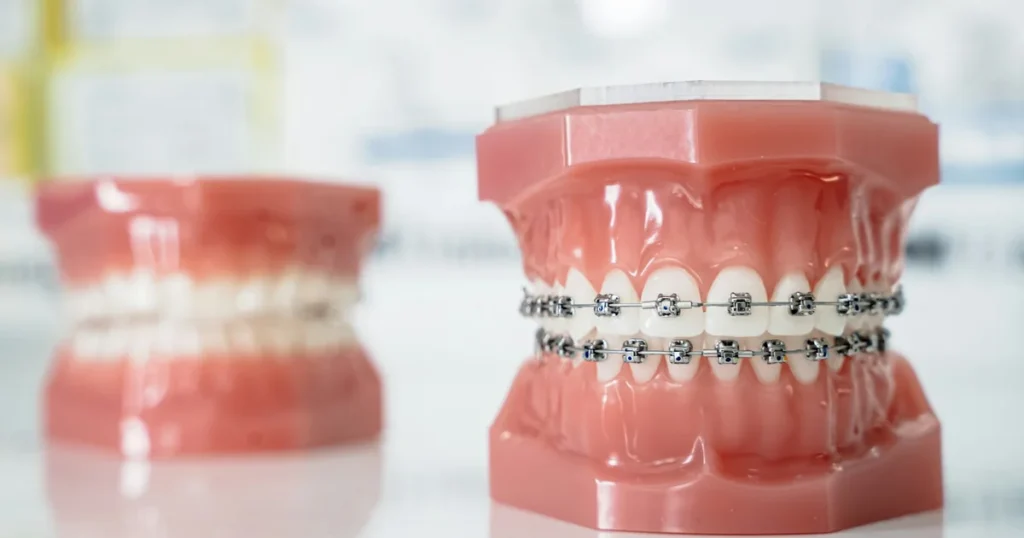
Orthodontics is the branch of dentistry that diagnoses, prevents and treats problems with how teeth line up and how the upper and lower jaws fit together. Orthodontic treatment uses gentle, controlled pressure to move teeth slowly into planned positions over months.
The most common teeth straightening options are traditional braces, which use brackets and wires fixed to the teeth, and clear aligners, which are removable custom-made trays. Comparing braces vs clear aligners is often the first big question people ask, but the right choice comes down to the type of problem and the person’s habits and goals.
Orthodontic care can help improve alignment, the way your teeth bite together and the look of your smile. It can suit children, teenagers and adults, based on their dental development and clinical needs. Results vary from person to person, and not every bite problem can be fixed with braces or aligners alone. At Redwood Dental Centre in Thunder Bay, an orthodontic assessment with our general dentist is the first step to understanding your options.
What Dental Problems Can Orthodontic Treatment Correct?
Orthodontic treatment can correct crowding, gaps, overbites, underbites, crossbites, open bites and rotated teeth, along with some jaw alignment concerns. How well a problem can be corrected comes down to its cause and severity.
Crowded teeth
Crowding happens when there is not enough room in the jaw for all the teeth to line up. Teeth may overlap, twist or sit behind each other. Orthodontic treatment can reposition crowded teeth to improve alignment, sometimes by creating extra space.
Gaps between teeth
Spaces can occur because of differences in tooth size, missing teeth or jaw growth. Orthodontic treatment may close gaps or redistribute space, for example to prepare for a replacement tooth.
Overbite
An overbite is when the upper front teeth overlap the lower front teeth too much vertically. Treatment can improve many overbites, depending on whether the cause is the teeth, the jaws or both.
Underbite
An underbite is when the lower front teeth sit in front of the upper front teeth. Treatment may involve braces or aligners, appliances that guide growth in younger patients, or, in some severe jaw-related cases, jaw surgery combined with orthodontics.
Crossbite
A crossbite is when one or more upper teeth bite inside the lower teeth instead of outside them. It can affect front or back teeth. Treatment depends on whether the problem is tooth position, jaw width or both.
Open bite
An open bite is when some upper and lower teeth do not meet when the mouth is closed, often at the front. Treatment planning depends on the cause, which can include habits such as thumb-sucking, tongue position or jaw shape.
Misaligned or rotated teeth
Teeth that are tilted, turned or out of line can be moved gradually into better positions.
Other bite and jaw concerns
An assessment may also pick up problems with how teeth are coming through, delayed or early loss of baby teeth, or how the jaws are developing.
| Orthodontic Problem | Description | Possible Treatment Goal |
| Crowding | Not enough space for teeth | Improve tooth alignment |
| Spacing | Gaps between teeth | Close or redistribute spaces |
| Overbite | Too much vertical overlap of front teeth | Improve vertical bite relationship |
| Underbite | Lower front teeth ahead of upper front teeth | Improve bite alignment when feasible |
| Crossbite | Upper teeth bite inside lower teeth | Correct affected tooth or jaw relationships |
| Open bite | Some upper and lower teeth do not meet | Improve tooth contact and bite function |
| Rotated teeth | Teeth turned at an incorrect angle | Reposition affected teeth |
Not every problem can be corrected with braces or aligners alone. Dental development, jaw structure, oral health and clinical findings all shape the recommendation.
What Are the Different Types of Orthodontic Treatments?
The main types of orthodontic treatment are metal braces, ceramic braces, clear aligners, lingual braces, specialized appliances and retainers. Each has its own strengths and limits, and not every option is offered at every practice.
Traditional metal braces
Metal brackets are bonded to the teeth and connected by a wire. The wire is adjusted over time to guide the teeth. Metal braces can treat a wide range of problems, including many complex alignment and bite issues.
Ceramic braces
Ceramic braces work the same way as metal braces but use tooth-coloured or clear brackets, so they are less noticeable. They may need a little more care to keep looking clean.
Clear aligners
Clear aligners are removable, custom-made plastic trays. You wear a series of them, each moving your teeth a small step further. They can suit many mild to moderate cases and some more complex ones, based on the system and the clinician’s assessment. Learn more about Invisalign® clear aligners.
Lingual braces
Lingual braces are fixed to the inside surfaces of the teeth, so they are hard to see from the front. Availability, suitability and cost vary, and they can take longer to get used to.
Palatal expanders and other appliances
Some appliances are designed for specific problems, such as widening a narrow upper jaw or guiding jaw growth. These are often most useful during childhood or the teen years, while the jaws are still growing.
Retainers
Retainers are used after active treatment to hold teeth in their new positions. They can be removable or a thin wire fixed behind the teeth. Retainers maintain results; they are not a replacement for full treatment.
| Treatment Option | Main Characteristics | Patient Considerations |
| Metal braces | Fixed brackets and wires | Suitable for many alignment and bite problems |
| Ceramic braces | Fixed braces with less noticeable brackets | Appearance, maintenance and cost considerations |
| Clear aligners | Removable transparent trays | Requires consistent wear and suitable case selection |
| Lingual braces | Brackets attached behind the teeth | May have extra comfort, cost and availability considerations |
| Orthodontic appliances | Devices for specific dental or jaw concerns | Suitability depends on age, growth and diagnosis |
| Retainers | Fixed or removable retention devices | Help maintain alignment after active treatment |
No single appliance is the best choice for everyone.
How Do Braces and Clear Aligners Straighten Teeth?
Braces and clear aligners straighten teeth by applying steady, controlled pressure that the bone around the teeth slowly adapts to. Braces do this with brackets and wires, while aligners use a series of trays.
How tooth movement works
Each tooth is held in the jaw by a ligament (the periodontal ligament). When gentle pressure is applied, the bone on one side of the root breaks down and new bone forms on the other side. This remodelling lets the tooth move a little at a time.
How braces work
The wire runs through the brackets and gently pushes or pulls the teeth toward their planned positions. Wires and other parts, such as elastics, are changed or adjusted at regular visits.
How clear aligners work
Each aligner is shaped slightly differently from the last. Wearing them in order moves the teeth step by step. Aligners need to be worn for most of the day, commonly about 20 to 22 hours, and swapped as directed.
Braces vs. clear aligners
| Comparison | Traditional Braces | Clear Aligners |
| Appearance | Visible brackets and wires | Transparent removable trays |
| Removability | Fixed to the teeth | Removed for eating and oral hygiene |
| Treatment approach | Wires and brackets guide tooth movement | Sequential aligners guide tooth movement |
| Daily maintenance | Careful cleaning around brackets and wires | Cleaning teeth and aligners |
| Eating restrictions | Some hard or sticky foods may need to be avoided | Aligners are generally removed before eating |
| Patient compliance | Appliances stay attached | Must be worn consistently every day |
| Suitability | Can treat a broad range of cases | Depends on case complexity and treatment planning |
| Follow-up | Periodic adjustments | Periodic progress checks and aligner changes |
Which option is more suitable?
Your dentist will consider:
- How severe the crowding or spacing is.
- The type of bite problem.
- Dental and jaw development.
- Oral hygiene habits.
- Personal preferences.
- How reliably you can follow appliance instructions.
- Cost and availability.
- A professional clinical assessment.
Both braces and aligners have advantages and limits. Neither is always faster, more comfortable or more effective. Our article on whether Invisalign is faster than braces looks at the question in more detail.
How Long Does Orthodontic Treatment Usually Take?
Full orthodontic treatment often takes around 12 to 24 months, but it can be shorter or longer. The NHS notes that orthodontic treatment usually takes between 6 and 30 months, depending on how complicated the problem is.
Severity of misalignment
Severe crowding, large gaps or complex bite problems usually need more time than minor tooth movement.
Type of appliance
The appliance and treatment plan affect the sequence and timing. Clear aligners are not always faster than braces.
Age and dental development
Treatment works at any age, but jaw growth in children and teens can open up options that are not available to adults.
Following instructions
Wearing aligners and elastics as directed, looking after appliances and keeping appointments all help treatment stay on track.
Oral health during treatment
Cavities, gum inflammation or broken appliances can slow progress.
Regular appointments
Check-ups let the clinician monitor movement and make adjustments.
| Treatment Stage | What Patients Can Expect |
| Initial consultation | Dental assessment, discussion of concerns and treatment options |
| Diagnostic planning | X-rays, scans, impressions or other records when needed |
| Appliance placement | Braces fitted or first aligners provided |
| Active treatment | Gradual tooth movement and regular progress reviews |
| Treatment completion | Braces removed or final aligners finished |
| Retention phase | Ongoing retainer use to help hold teeth in place |
Teeth naturally tend to shift after treatment, so retention continues afterward and may mean wearing a retainer for the long term.
How Should You Care for Your Teeth During Orthodontic Treatment?
Brush carefully with fluoride toothpaste, clean between your teeth every day, look after your appliance and keep up regular dental visits. Braces and aligners make plaque easier to trap, which can lead to decay and white marks on the teeth if cleaning is not thorough.
Brushing with braces or aligners
Brush at least twice a day for about two minutes, paying close attention to the area around each bracket and along the gumline.
Cleaning between teeth
Use floss with a floss threader, interdental brushes or another tool your dentist recommends to clean between teeth and under wires.
Caring for clear aligners
Clean aligners as instructed. Take them out to eat or drink anything but plain water, and brush before putting them back in when you can.
Foods to avoid with braces
Hard, sticky or chewy foods, such as hard candy, toffee, popcorn kernels and ice, can break brackets or bend wires.
Managing mild discomfort
Some pressure or tenderness is normal for a few days after an adjustment or a new aligner. Orthodontic wax can help with rubbing, and your clinician can suggest suitable pain relief.
Regular dental check-ups
Keep seeing your dentist for examinations and Dental Hygiene appointments during treatment. Patients with braces or aligners often need closer monitoring.
Sports
Wear a suitable mouthguard for contact sports to protect your teeth and appliance.
Broken appliances
Contact your provider if a bracket comes loose, a wire pokes your cheek or an aligner cracks. Do not try to fix or adjust it yourself.
Following instructions
Wear elastics, aligners and retainers exactly as prescribed.
What Are the Benefits and Limitations of Orthodontic Treatment?
Orthodontic treatment can improve alignment, the bite and the look of your smile, but it has limits and some risks. Knowing both helps set realistic expectations.
Potential benefits
- Better alignment: crowded, spaced or rotated teeth can be moved into better positions.
- Improved bite: the upper and lower teeth may fit together better.
- Easier cleaning in some areas: straighter teeth can be easier to clean, although treatment does not automatically prevent decay or gum disease.
- Smile appearance: many people notice a more even smile.
- Function: some people find biting or chewing easier after treatment.
Limitations and risks
- Temporary discomfort.
- Tooth sensitivity.
- Gum irritation.
- Plaque build-up around appliances.
- White spots on the enamel (early decay) if cleaning is poor.
- Root shortening (resorption) in some people.
- Changes in gum health.
- Treatment delays.
- Teeth moving back if retainers are not worn as advised.
The diagnosis, the appliance used, how your body responds and how closely you follow professional advice all affect the outcome.
When Should Children, Teenagers, and Adults Consider Orthodontic Treatment?
Children can benefit from an early check, teenagers are at a common stage for treatment, and adults of any age can be assessed if their oral health is good.
Children
The American Association of Orthodontists recommends that children first see an orthodontist no later than age 7. An early visit can spot developing problems, but many children will not need treatment right away. Learn more about our Children’s and Family Dental care.
Teenagers
Most permanent teeth have come through by the teen years, and the jaws are still growing, which makes this a common time for treatment.
Adults
Adults often seek treatment for long-standing crowding, spacing or bite problems. Planning has to take into account existing fillings and crowns, gum health and any missing teeth.
Later in life
There is no set upper age limit. Oral health and clinical circumstances decide suitability.
Signs an assessment may help
- Crowded or overlapping teeth.
- Large gaps.
- Difficulty biting or chewing.
- Teeth that do not meet properly.
- Teeth that stick out.
- Baby teeth lost very early or very late.
- Concerns about jaw or bite development.
Appearance alone does not mean treatment is needed. Ask a professional.
Choosing an Orthodontic Provider
Choose a qualified provider who examines you thoroughly, explains your options honestly and plans for the retention phase.
Look for:
- Appropriate dental qualifications and registration with the Royal College of Dental Surgeons of Ontario.
- Specialist orthodontic qualifications where your case calls for them.
- Experience with your specific alignment or bite concern.
- A thorough examination and diagnostic records.
- Clear explanations of braces, aligners and other options.
- Honest discussion of benefits, risks and limits.
- Clear information about costs and payment options.
- Realistic expectations about how long treatment takes.
- Regular follow-up appointments.
- A plan for retainers after treatment.
- Coordination with your general dentist or other specialists when needed.
Ask whether your provider is a general dentist or a certified specialist in orthodontics, and which options suit your case. General dentists can treat many cases, and complex cases may be referred to a specialist.
Orthodontics and Teeth Straightening Options
An orthodontic consultation lets a dental professional check your alignment, bite, dental development and oral health before recommending treatment. You can then compare teeth straightening options based on your needs, lifestyle, preferences and budget.
If you are looking for a dentist in Thunder Bay, Redwood Dental Centre offers Orthodontics with clear removable aligners, including Invisalign®, most often for mild to moderate crowding, spacing and some bite issues. Care is provided by our general dentist, who has more than 20 years of experience in general dentistry and is not a certified specialist in orthodontics. If your case involves a complex bite or jaw problem, we refer you to a specialist, who will give you their own separate quote.
You receive our quote before anything is ordered, and we offer direct billing to most insurance plans. Call us to ask which option suits you, consultation times and referral arrangements.
Frequently Asked Questions
What is orthodontics and what does it treat?
Orthodontics is the area of dentistry that diagnoses and treats problems with tooth alignment and bite. It can address crowded teeth, gaps, overbites, underbites, crossbites and other alignment concerns. A professional assessment decides whether treatment suits you.
What is the difference between braces and clear aligners?
Braces use brackets and wires fixed to the teeth, while clear aligners use a series of removable, transparent trays. Braces can treat a broad range of problems. Aligner suitability depends on how complex the case is and how consistently they are worn. Neither is better for everyone.
How long does orthodontic treatment take?
Full orthodontic treatment often takes around 12 to 24 months, though it can range from a few months to more than two years. The problem, the treatment approach, how your teeth respond and how closely you follow instructions all affect timing. Retainers are usually needed afterward.
At what age should someone see an orthodontist?
The American Association of Orthodontists recommends a first orthodontic check by age 7. An early visit can identify developing problems, but many children do not need treatment right away. Teenagers and adults can also be assessed at any time.
Can orthodontic treatment correct bite problems?
Yes, orthodontic treatment can correct many bite problems, including certain overbites, underbites, crossbites and open bites. Options depend on whether the problem involves tooth position, jaw structure or both. Some severe jaw problems need extra treatment, such as jaw surgery.
Taking the First Step Toward Straighter Teeth
Orthodontics offers several ways to straighten teeth and improve the bite, from braces to clear aligners and specialized appliances. Each option has different uses and limits, and every plan needs a retention phase to hold the results.
Thinking about straightening your teeth or your child’s? Book an assessment so we can talk through your goals, suitable options, likely timing, costs and retainer needs. Contact us to ask about teeth straightening options and consultation appointments.
This article is general information, not dental advice for your situation. Speak with a dentist about the right option for your teeth.