
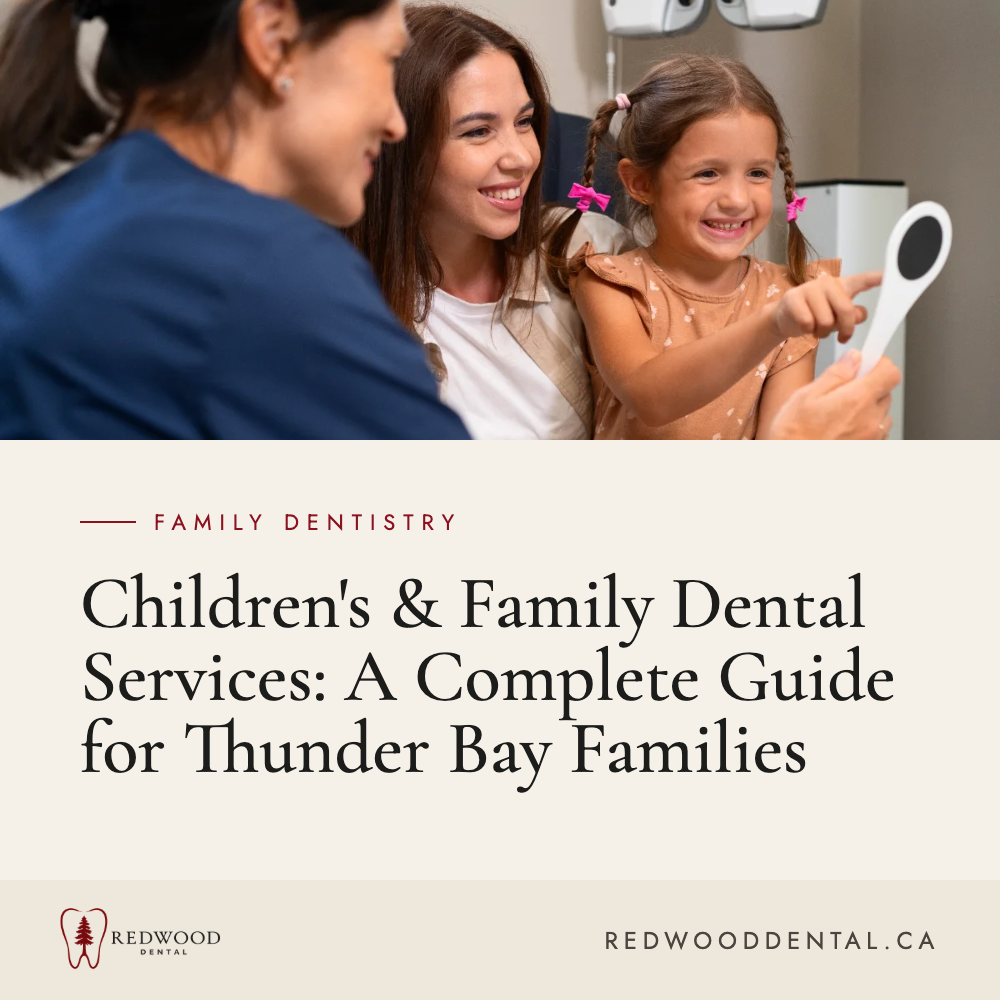
Children’s and family dental services bring dental care for every stage of life together under one roof, making it easier for households to manage check-ups, routine treatments and ongoing oral-health needs without juggling multiple providers. At Redwood Dental Centre, that means one Redwood Ave practice — led by Dr. Ahmed Ameen Al-Obaidi (Dr. Ameen) and Dr. Najjar — that has been seeing Thunder Bay families through more than 25 years of toddlers, teens and grandparents. For afamily dentist Thunder Bay households can rely on, this usually means gentle, age-appropriate visits from achildren’s dentist Thunder Bay parents trust. Children’s teeth, jaws and habits are still developing, so their dental needs differ from an adult’s, which is why paediatric dental care focuses heavily on prevention and early detection. Children’s & family dental services are dental care services designed to support the oral-health needs of children, teens and adults through preventive, diagnostic and restorative care tailored to each stage of life. The right mix of treatment always depends on a patient’s age, dental health, medical history and a dentist’s individual assessment.
What Are Children’s & Family Dental Services?
Children’s & family dental services describe the full range of dental care a household can access at one practice, from a toddler’s first check-up to routine care for parents and grandparents. Rather than splitting care between a children’s specialist and a separate adult dentist, families can manage most everyday dental needs in one place — and, at Redwood, often on the same day, since the practice can typically see more than one family member during a single visit window.
This type of care commonly includes:
- Preventive dental examinations
- Professional teeth cleaning
- Dental X-rays when clinically appropriate
- Fluoride treatments
- Dental sealants where appropriate
- Cavity detection and treatment
- Fillings
- Monitoring of tooth development
- Assessment of bite and jaw development
- Orthodontic evaluations for teens
- Emergency dental assessments
- Oral-health education
- Gum-health care
- Restorative dental treatments
- Age-appropriate dental advice
- Referrals to specialists when required
What a patient needs from this list changes considerably with age. A toddler’s visit might focus on getting comfortable in the chair and checking how new teeth are coming in, while a teenager’s visit might centre on permanent teeth, gum health and orthodontic evaluation. The table below breaks this down by life stage.
| Age Group | Common Dental Focus | Examples of Care |
| Infants and toddlers | Early oral-health development | First dental visits, parent education, tooth-development monitoring |
| Young children | Prevention and healthy habits | Examinations, fluoride, sealants, cavity prevention |
| Pre-teens and teens | Developing permanent teeth | Preventive care, orthodontic evaluation, sports-related advice |
| Adults | Ongoing oral health | Examinations, cleaning, fillings, gum-health monitoring |
| Older adults | Maintaining function and comfort | Preventive care, restorative treatment and denture-related care |
Not every patient needs every service on this list. A dentist assesses each person individually and recommends care based on their current oral health, risk factors and stage of development, rather than applying a one-size-fits-all treatment plan.
Preventive Dental Care for Children and Families
Preventive dental care aims to catch potential problems early, before they turn into pain, infection or more involved treatment, and to help patients of every age keep their teeth and gums healthy.
For children and families, preventive care commonly involves:
- Routine dental examinations
- Professional cleanings
- Fluoride use
- Dental sealants
- Appropriate dental X-rays
- Monitoring of tooth eruption and oral development
- Cavity-risk assessment
- Gum-health assessment
- Oral-hygiene instruction
- Dietary guidance for oral health
- Mouthguard recommendations for appropriate activities
- Early identification of dental concerns
Prevention matters even more for children because their primary teeth and developing permanent teeth are more vulnerable while enamel is still maturing and habits are still forming. According toCanada.ca’s guidance on children’s oral health, limiting prolonged contact with sugary drinks and encouraging water between meals are among the simplest ways parents can lower a child’s risk of decay. Fluoride also plays a well-documented role in strengthening enamel and making teeth more resistant to the acids that cause cavities, as outlined byHealth Canada’s information on fluoride and oral health. A dental professional can advise on the right amount and type of fluoride for a child’s age.
Family-focusedpreventive dental hygiene care helps parents build consistent routines rather than treating dental visits as an occasional afterthought. When check-ups, cleanings and home care all sit within one family routine, it becomes easier to stay on top of everyone’s oral health at once.
Practical points for parents include:
- Schedule regular dental visits
- Supervise young children’s brushing
- Encourage twice-daily brushing with fluoride toothpaste as appropriate for the child’s age
- Encourage daily cleaning between teeth once appropriate
- Limit frequent sugary snacks and drinks
- Replace toothbrushes when the bristles wear out
- Address dental concerns promptly rather than waiting
- Encourage children to build positive dental habits early
How often a child needs a dental visit depends on their individual risk and their dentist’s recommendation, so it is worth asking directly rather than assuming a fixed interval applies to every child.
Common Dental Treatments for Children
Children may need different dental treatments depending on how their teeth are developing, their oral-health risk and any existing dental problems. Not every child will need every treatment below, but these are among the most common.
- Dental examinations: regular checks of teeth, gums and bite
- Professional cleaning: removal of plaque and build-up that brushing alone cannot reach
- Fluoride treatments: targeted enamel strengthening, particularly for children at higher risk of decay
- Dental sealants: protective coatings applied to the chewing surfaces of back teeth to help prevent food and bacteria settling into grooves, an approach supported byCanada.ca’s oral health guidance
- Fillings for cavities: treatment for tooth decay once it has already started
- Dental X-rays when indicated: imaging to check development or hidden decay
- Emergency dental care: assessment and treatment for knocked-out, chipped or painful teeth
- Space management where clinically required: helping guide permanent teeth into the correct position if a baby tooth is lost early
- Assessment of developing teeth: tracking how permanent teeth are coming through
- Assessment of bite and jaw development: identifying issues that may need monitoring or referral
- Mouthguards for sports: protection for children playing contact or high-impact sports
- Referrals for orthodontic or specialist care: connecting families with the right specialist when needed
Each of these treatments serves a different purpose, and a dentist will only recommend the ones relevant to a particular child’s mouth and history rather than applying every option automatically.
Dental Care for Different Childhood Stages
Dental needs shift as children grow, so care that suits a toddler will look quite different from care for a teenager.
Babies and Toddlers
Early dental care focuses on establishing routines rather than treating problems. This typically includes:
- Establishing oral-health routines
- Monitoring emerging teeth
- Parent guidance on cleaning a baby’s gums and first teeth
- Early identification of dental concerns
The Canadian Dental Association recommends that children be seen by a dental professional within six months of their first tooth appearing or by one year of age, whichever comes first. Starting early lets a dentist monitor development and answer parents’ questions before any concerns arise.
Young Children
As more teeth come in, the focus shifts to preventing cavities and building independence with brushing. This stage often involves:
- Preventing cavities through diet and hygiene guidance
- Building consistent brushing habits
- Considering fluoride and sealants where appropriate
- Monitoring both primary and emerging permanent teeth
Pre-Teens
As permanent teeth continue to come through, dental visits start to look more like an adult check-up, with some added considerations:
- Monitoring permanent tooth development
- Reinforcing independent oral-hygiene habits
- Reviewing cavity risk as diets and routines change
- Considering mouthguards for children starting organised sports
Teenagers
Teenagers benefit from preventive care that accounts for a busier lifestyle and, for some, orthodontic treatment:
- Preventive dental care
- Gum-health monitoring
- Oral-hygiene support as independence grows
- Dental care alongside orthodontic evaluation when applicable
- Guidance on lifestyle factors, such as diet and habits, that can affect oral health
At Redwood, orthodontic evaluations for teens are part of the practice’s own service list, so this stage of care can often stay within the same family appointment book rather than requiring a separate first stop.
How to Build Healthy Dental Habits at Home
Consistent home care is what keeps children’s and family’s oral health on track between professional dental visits, and it does not need to be complicated to be effective.
Helpful habits include:
- Brush teeth twice daily
- Use fluoride toothpaste appropriate for the child’s age
- Supervise brushing when children need assistance
- Clean between teeth once appropriate for the child’s development
- Encourage healthy food and drink choices
- Reduce frequent sugary snacks and drinks
- Make dental visits part of the family’s routine
- Replace toothbrushes as needed
- Protect teeth during sports with a mouthguard
- Avoid using teeth as tools, such as to open packaging
- Encourage children to tell parents about dental discomfort
- Model good oral-hygiene habits as a family
TheOntario Dental Association’s guidance on brushing and flossing reinforces that daily brushing and cleaning between teeth, done properly and consistently, remain some of the most effective tools for preventing decay and gum disease at any age. When parents model these habits themselves, children are more likely to pick them up naturally.
Helping Children Feel Comfortable About Dental Visits
How a child experiences their early dental visits can shape how comfortable they feel about dental care as they grow older. A few simple approaches can help:
- Use positive, age-appropriate language
- Avoid sharing frightening dental stories in front of children
- Explain what to expect in simple, honest terms
- Let children ask questions
- Keep dental routines consistent
- Praise cooperation rather than focusing on fear
- Choose a dental provider experienced with children
- Avoid promising that treatment will never feel like anything
- Let the dental team explain procedures in child-friendly language
Families who want extra reassurance around nervousness at the dentist, for children or adults, may also find it useful to read aboutmanaging dental anxiety, which covers some of the approaches practices use to help anxious patients feel more at ease.
Choosing the Right Family Dentist
Choosing a family dentist involves more than picking whichever practice is closest to home. Families are usually better served by considering a dentist’s experience with children, the range of services on offer, their approach to prevention and how well they can support different age groups under one roof.
Worth factoring into the decision:
- Experience treating children
- Experience treating adults
- Preventive-care approach
- Range of family dental services
- Child-friendly environment
- Communication style
- Appointment availability
- Emergency-care arrangements
- Accessibility
- Location and convenience
- How clearly treatment is explained
- Personalised treatment planning
- Appropriate use of diagnostic imaging
- Referral pathways when specialist care is needed
- Transparent discussion of treatment costs
- Insurance and payment information where applicable
| Consideration | Why It Matters | What Families Can Ask |
| Children’s experience | Children may need age-appropriate communication and care | Does the practice regularly treat children? |
| Range of services | Helps families manage different dental needs in one place | Which preventive and restorative services are available? |
| Preventive approach | Supports long-term oral health | How are children’s cavity risks assessed? |
| Location | Makes routine appointments easier to keep | Is the practice convenient for our household? |
| Emergency care | Dental problems can occur unexpectedly | What should we do if a dental emergency occurs? |
| Communication | Helps families understand treatment options | Will the dentist explain findings and recommendations? |
| Referrals | Some conditions require specialist care | How are specialist referrals handled? |
| Appointment scheduling | Families often juggle multiple schedules | Are family appointments available? |
Afamily dentist Thunder Bay households return to for years is generally one that communicates clearly, explains treatment options in plain language and adapts its approach as children move from their first visit through to their teenage years. At Redwood, that also shows up in practical terms: the practice bills most local insurance plans directly on a patient’s behalf, which cuts down on paperwork for parents juggling several family members’ appointments.
Questions to Ask Before Choosing a Family Dentist
- Do you provide dental care for children and adults?
- What preventive services are available for children?
- How do you help children feel comfortable during appointments?
- How are dental emergencies handled?
- What happens if my child requires specialist treatment?
- How often should my child receive a dental examination?
- What can parents do at home to reduce cavity risk?
- How are treatment recommendations explained?
- What payment or insurance options are available?
No single provider is the right fit for every family. The goal is finding a practice whose approach, availability and range of services suit your household’s particular needs.
Dental Care for Children and Adults: Building a Family Oral-Health Routine
Families can simplify oral-health management by pairing consistent home care with dental visits scheduled around each person’s individual needs, rather than treating children’s and adults’ dental care as two separate systems.
This might involve:
- Keeping a shared family dental calendar
- Scheduling routine examinations for everyone in the household
- Tracking children’s dental milestones, such as new teeth or a first filling
- Maintaining consistent brushing routines for children and adults alike
- Replacing toothbrushes regularly
- Keeping dental products accessible in the bathroom
- Planning ahead for sports mouthguards where needed
- Addressing dental concerns early rather than waiting for them to worsen
- Maintaining regular adult dental care alongside children’s appointments, including attention to gum health
| Routine | Children | Adults |
| Brush teeth | Twice daily with age-appropriate fluoride toothpaste | Twice daily with fluoride toothpaste |
| Clean between teeth | When appropriate for the child’s development | Daily |
| Dental examinations | Based on individual dental needs | Based on individual dental needs |
| Professional cleaning | When recommended | When recommended |
| Fluoride | Based on age and individual risk | Based on individual needs |
| Dental protection | Mouthguard where appropriate | Mouthguard where appropriate |
| Diet | Limit frequent sugary foods and drinks | Maintain a balanced, tooth-friendly diet |
Parents managing their own gum health alongside their children’s routines may find it useful to read thesegum disease prevention tips, since adult gum health is just as much a part of a family’s overall routine as a child’s cavity prevention. A dental professional may recommend adjustments to any of the routines above depending on individual oral-health risk, so these tables are a starting point rather than a fixed prescription.
Local Considerations for Thunder Bay Families
Thunder Bay families often benefit from choosing a dental practice that can accommodate different age groups and coordinate appointments around busy household schedules, rather than needing separate providers for children and adults.
Things worth considering locally include:
- Convenient appointment scheduling that works around school and work hours
- Experience treating children specifically, not just adults
- The ability to coordinate appointments for multiple family members
- A genuine focus on preventive dental care
- Clear guidance on what to do in a dental emergency
- An accessible location for regular visits
- Continuity of care as children grow into teenagers and adults
- Clear communication with both parents and adult patients
- Established referral options if specialised care is ever needed
Redwood Dental Centre, at 2833 Redwood Ave, is open Monday to Friday, 9 am to 5 pm, and has been part of the Thunder Bay community for more than 25 years — long enough that some parents visiting today were once patients themselves. The practice also participates in the Canadian Dental Care Plan for First Nations and Inuit patients accessing non-insured health benefits, which is worth knowing for Thunder Bay families navigating coverage questions. As with any dental decision, it is worth confirming a specific practice’s current services, appointment availability and payment options directly, since these details can change over time.
Making Family Dental Care Part of Your Routine
Children’s & family dental services work best when they become a normal part of a household’s routine rather than something arranged only when a problem comes up. A family-focused practice can support children, teens and adults with age-appropriate preventive and restorative care, while giving parents practical guidance for keeping healthy habits going at home between visits. If your family is due for a check-up or you would like to discuss what care might suit your household, get in touch with Redwood Dental Centre to talk through your family’s dental needs.
Book an Appointment
Frequently Asked Questions
What Are Children’s & Family Dental Services?
Children’s & family dental services provide preventive, diagnostic and restorative dental care for patients at different stages of life, including children, teenagers and adults. Common services include examinations, professional cleanings, fluoride treatments, dental sealants, fillings and oral-health education. The specific services recommended for any one patient depend on their age, dental development, oral-health condition and individual risk factors, so treatment plans are rarely identical from one family member to the next.
What Dental Services Do Children Typically Need?
Children commonly need preventive examinations, professional cleaning, fluoride care where appropriate and monitoring of tooth development. Some children may also require dental sealants, fillings, X-rays or emergency treatment depending on their circumstances. Paediatric dental care should be tailored to a child’s age, dental development and oral-health needs rather than assuming every child requires the same set of treatments at the same time.
When Should a Child First Visit the Dentist?
Children should start receiving dental care early in life rather than waiting until a problem appears, generally within six months of the first tooth appearing or by age one. Early visits let a dental professional monitor emerging teeth, give parents practical oral-health guidance and pick up on potential concerns while they are still minor. Parents should arrange an assessment sooner if they notice anything concerning, such as discolouration, swelling or pain.
What Should I Look for in a Children’s Dentist in Thunder Bay?
Look at experience with children, the range of preventive services on offer, communication style, appointment convenience, emergency arrangements and how well the practice adapts to a child’s changing needs as they grow. A child-friendly approach matters too, since positive early experiences tend to make children more comfortable with routine dental care later on.
Can the Same Family Dentist Treat Children and Adults?
Many dental practices, including Redwood, provide care for both children and adults, which lets families manage a range of dental needs through a single practice and often the same appointment window. It is worth confirming with any practice which specific services are available for your family and whether specialist referrals are provided when additional expertise is needed.